We use cookies to make your experience better. To comply with the new e-Privacy directive, we need to ask for your consent to set the cookies. Learn more.











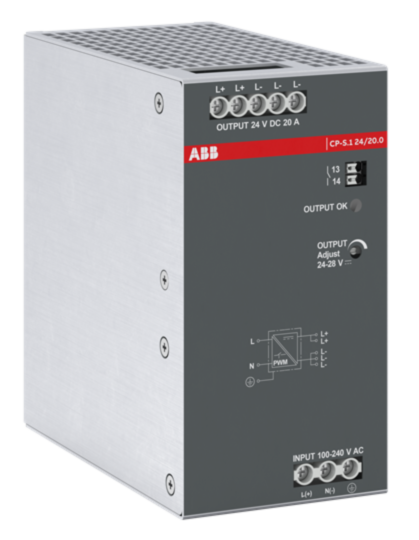
ABB CP-S.1 24/20.0 Power supply 100-240Vac - 24Vdc output 20 Amp
MPN: 1SVR320761R1000
Alt. SKU: CP-S.1 24/20.0
Special Price
£238.25
£198.54
Regular Price
£366.54

Why Choose the CP-S.1 24/20.0 [1SVR320761R1000]
The CP-S.1 24/20.0 is a power supply from the new generation CP-S.1 range. The primary switch mode power supply offers a wide range input of 85-264 V AC and 90-277 V DC, rated input voltage is 100-240 V AC, respectively 100-250 V DC. The rated output power is 480 W, rated output current is 20 A at an output voltage of 24 V DC. The output voltage is adjustable within a range of 24 to 28 V DC. The power supply provides a U/I output characteristic with a power reserve of up to 150 % for 5 s and allows parallel operation to increase capacity and to enable redundancy. Further features are: power factor correction acc. to EN 61000-3-2. Redundancy unit and buffer modules are available as accessories.
Technical Specification
- Function: Switch mode power supply, 1-phase.
- Input Voltage Range: 85-264 V AC, 90-277 V DC; Rated 100-240 V AC, 100-250 V DC.
- Output Voltage: 24 V DC adjustable to 28 V DC.
- Rated Output Current: 20 A (max 30 A).
- Rated Output Power: 480 W.
- Impulse Withstand Voltage: 4 kV (Input/Output), 0.8 kV (Output/PE).
- Insulation Voltage: 300 V (Input/Output), 50 V (Output/PE).
- Degree of Protection: IP20 (housing and terminals).
- Terminal Capacity: 0.5-4.0 mm² flexible and rigid wires with ferrule.
- Mounting: DIN Rail TH35-15 and TH35-7.5 per IEC 60715.
Trusted By Customers Worldwide
"Specified by UK panel builders for dependable control." Controls Engineer, UK
Frequently Asked Questions
What is the input voltage range for the CP-S.1 24/20.0 power supply?
The input voltage range is 85-264 V AC and 90-277 V DC, with a rated input of 100-240 V AC and 100-250 V DC.
What is the adjustable output voltage range?
The output voltage is adjustable from 24 V DC to 28 V DC.
What is the rated output current and power of this power supply?
The rated output current is 20 A, with a maximum of 30 A, and the rated output power is 480 W.
What type of mounting is compatible with the CP-S.1 24/20.0?
This power supply can be mounted on DIN Rail TH35-15 and TH35-7.5 per IEC 60715.
What is the terminal capacity for wiring?
The terminal capacity is 0.5-4.0 mm² for flexible and rigid wires with ferrule.
Does the power supply support parallel operation?
Yes, it allows parallel operation to increase capacity and enable redundancy.
What safety standards does the CP-S.1 24/20.0 conform to?
See the manufacturer's data sheet for standards and approvals.
| Manufacturer Part Number | 1SVR320761R1000 |
|---|---|
| Alternative Product SKU | CP-S.1 24/20.0 |
| Manufacturer | ABB |
| Barcode | 4013614561122 |
| Input Phases | Single Phase |
| Rated supply voltage DC | 100-250VDC |
| Rated supply voltage AC 50 Hz | 100-240VAC |
| Input Voltage | 85-264VAC/90-277VDC |
| Typical Input Current | 2.55A @ 230VAC/4.85A @ 115VAC |
| Input Frequency | 50/60Hz |
| Output Voltage | 24V |
| Output Current | 20A |
| Max. output current 1 | 30A |
| Power output | 480W |
| Degree of protection (IP) | IP20 |
| Mounting Options | Rail |
| Range | CP-S |
| Height | 129.4mm |
| Width | 68mm |
| Depth | 127mm |
| HS Code | 85044095 |
| Country of Manufacture | China |
Write Your Own Review
The History of ABB
ABB was founded in 1988, after over a century of experience in the production of electrical components. In 1883, ASEA was founded by Ludvig Fredholm, manufacturing electrical lights and generators. Elsewhere, in Switzerland, Brown, Boeveri & Cie (BBC) was formed in 1891, focused on the production of AC & DC motors, transformers, generators and steam turbines. In 1988, the two companies merged, with ABB standing for ASEA Brown Boveri.

Formed as a merger between two companies, ABB has continued to add to its portfolio over the years, purchasing more companies and making them a part of ABB. The company first expanded in 1990 when it purchased US firm Combustion Engineering, specialists in the production of fossil fuel power and nuclear power supply systems, and the metering and control division of Westinghouse. Their third acquisition came in 1997, when automation group Elsag Bailey joined the ABB portfolio along with its companies Bailey Controls, Fischer & Porter and Hartmann & Braun, the biggest takeover in the history of ABB.
In the early 2000s, things went the opposite way, as ABB sold its boiler and fossil fuel businesses to Alstom, and its nuclear business to Westinghouse. It also sold its interest in conventional power generation systems to Alstom Power, dropping out of venture ABB-Alstom Power. In 2004, it sold its Building Systems unit to Swiss equity company Capvis. All this took place as ABB found itself near bankruptcy, due to claims of asbestos liability and a build-up of debt. In 2006, the asbestos claims were settled and two years later ABB was back to acquiring other companies. In 2008, they bought Ber-Mac Electrical & Instrumentation, part of an initiative to increase ABB’s presence in the western Canada oil and gas industry. In 2010, software company Ventyx was purchased from Vista Equity Partners for over $1 billion, with their software sector growing further in 2011 when Australian company Mincom was bought. There have been four big money acquisitions since – Baldor Electric USA for $4.2 billion in 2011, Thomas & Betts for $3.9 million in January 2012, wireless technology specialists Tropos in June 2012, and Power-One for $1 billion in 2013.
The Structure of ABB
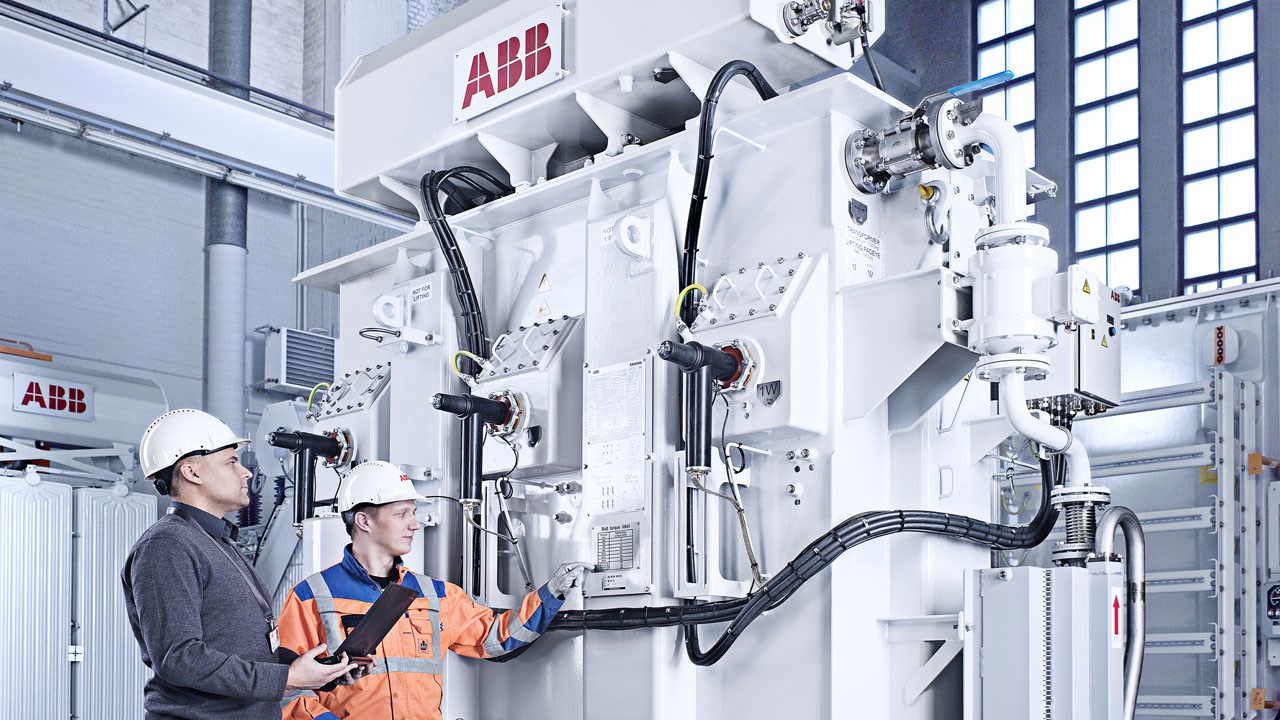
With such a large number of acquisitions under the ABB umbrella, the organisation operates under four key production divisions, following a re-structure in January 2017.
The Electrification Products division focuses on the manufacture of products such as electric vehicle infrastructure, modular substations, distribution automation, solar inverters, ventilation systems, control products and wiring accessories.
The division of Robotics and Motion creates electric motors, drives, generators, industrial robots and power electronics. The production of wind generators and solar power inverters also falls into this division.
Industrial Automation is the division that focuses on creating control systems, plant optimisation, and automation applications, across seven business units, specialising in Control Technologies, Power Generation & Water, Process Industries, Turbocharging, Marine & Ports, Measurement & Analytics, and Oil, Gas & Chemicals.
Finally, the Power Grids division produces components for the transmission and distribution of electricity, incorporating ABB’s manufacturing network of transformers, switchgear, circuit breakers and digital protective relays.
ABB’s Product Ranges
ABB has a huge range of products, for a varied selection of industries. Amongst the products they produce are furniture, equipment and designs for control rooms; drives; high voltage products like switchgears, generator circuit breakers and instrument transformers; low voltage products such as electrical distribution, building technologies and electrical installation; and tools for measurement and analytics. They produce medium voltage products like modular systems and distribution automation and protection; mechanical power transmission products, metallurgical products such as electromagnetic stirring solutions for steel and aluminium; motors and generators; PLC (Programmable Logic Controllers) Automation, with control panels and legacy products; power converters and inverters, including solar inverters, wind turbine converters, hydrokinetic converters, and traction converters; robotics such as industrial robots, controllers and application software; semiconductors including IGBT and diode modules, insulated gate bipolar transistors, integrated gate-commutated thyristors, diodes and silicon surge voltage suppressors; substation automation protection and control components; and transformers, including power transformers, distribution transformers, dry-type transformers, reactors and inductors and other components.
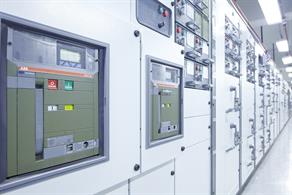
As well as a range of products, ABB also manufactures and producers a range of systems. This includes operations management software; distributed control systems; electric vehicle charging infrastructure; enterprise software; FACTS (Flexible Alternating Current Transmission Systems); high voltage cables; HVDC (high-voltage direct current), including HVDC Classic (LCC) and HDVD Light (VSC); integrated marine systems such as vessel segments; microgrid solutions including distributed generation and renewable energy power conversion; network management including substation automation protection and control; offshore wind connections; power consulting such as asset evaluation, systems analysis, commercial and industrial system studies and equipment and technology selection and design; power electronics; safety information and solutions; substation automation protection and control; substations and electrification; turbocharging; and UPS & power conditioning.
ABB produces and manufactures products and systems for a range of industries, covering the sectors of aluminium, automotive, buildings, cement, chemical, data centers, food & beverage, life sciences, marine & portals, metals, mining, oil & gas, ports, power distribution, power generation, power transmission, printing, process automation, pulp and paper, railway, solar power, water, and wind power.
What ABB products do LED Controls stock?
At LED Controls, we stock a range of ABB’s factory automation products, including thermal overload relays, moulded case circuit breakers, programmable logic controllers, machine safety components and sensors, motor control gear such as contactors, overloads and timer relays, power distribution consumer units, outgoing MCBs & RCB0S, and distribution boards.
Useful ABB Links