We use cookies to make your experience better. To comply with the new e-Privacy directive, we need to ask for your consent to set the cookies. Learn more.











What is Motor Control Gear? The LED Controls Complete Guide
What is Motor Control Gear?
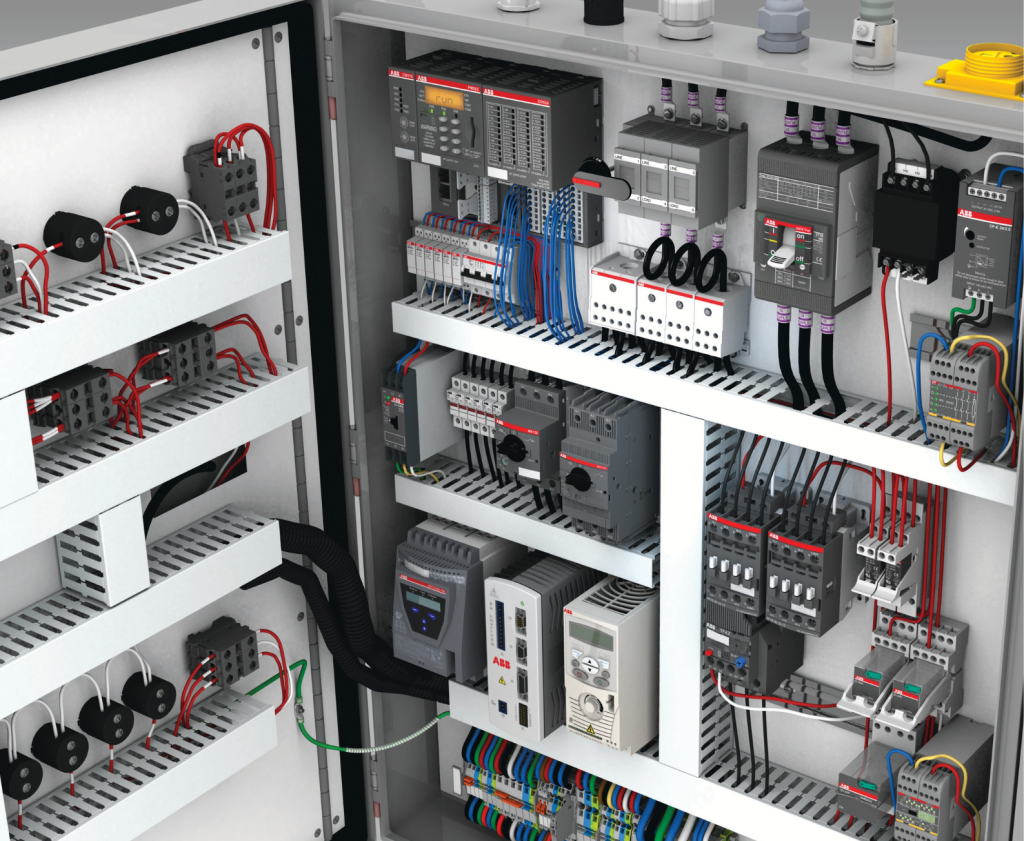
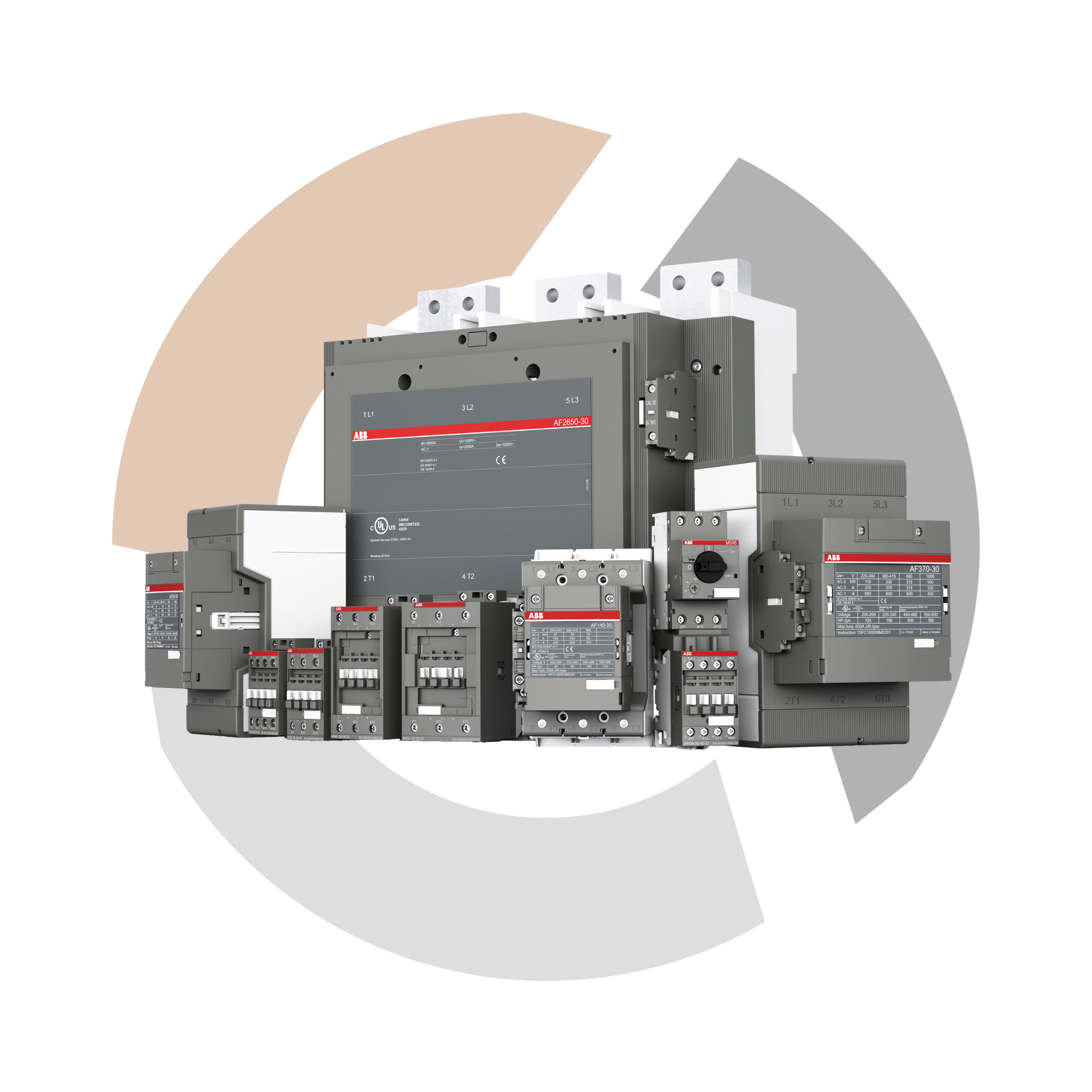
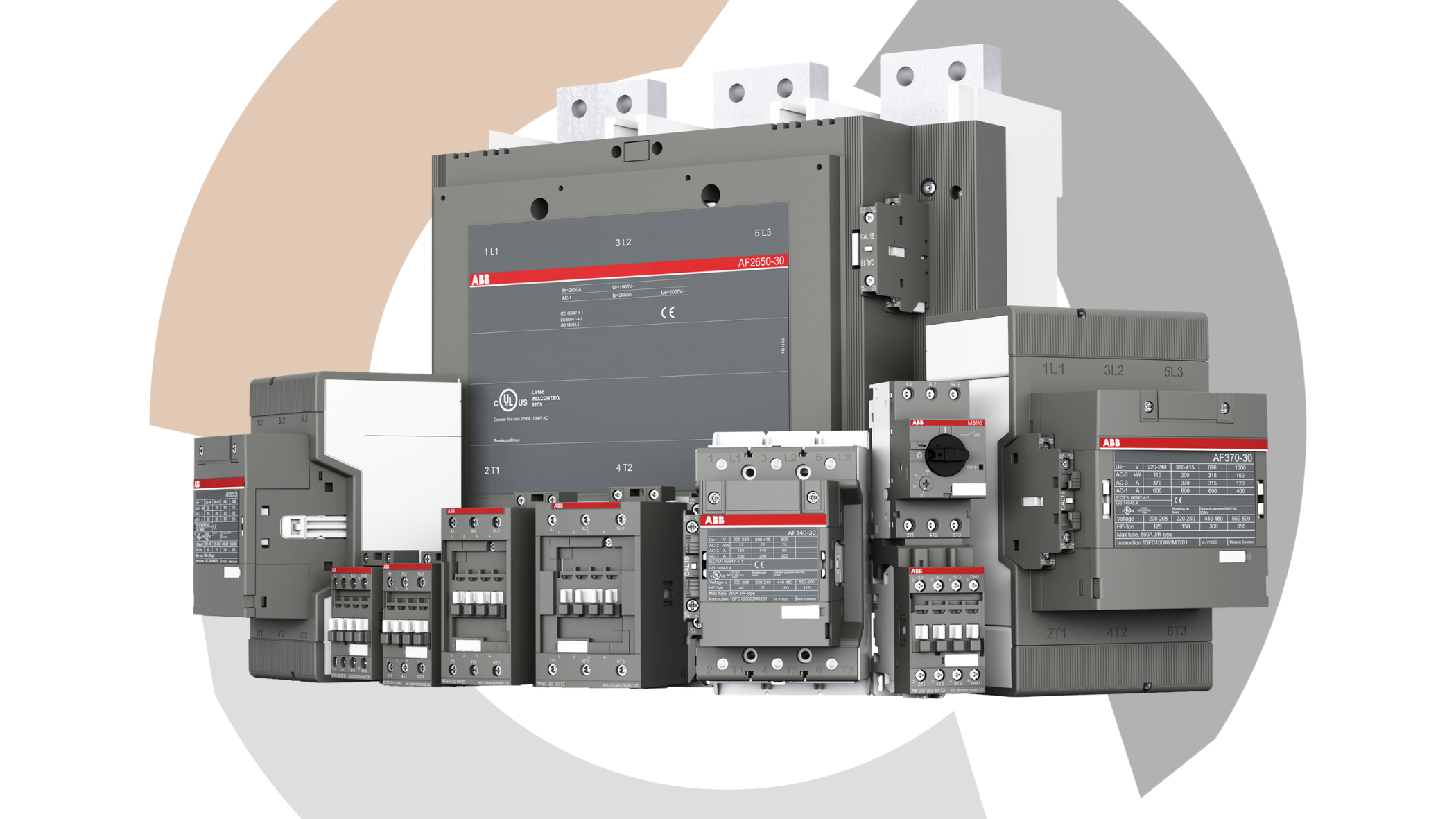
LED Controls is a trusted supplier of Motor control gear, a range of electrical components used to start, stop, protect and regulate electric motors. LED Controls provides essential equipment for use in industrial settings, commercial buildings, and anywhere motors are part of the process.
Motor control gear can be used to:
- Safely switch a motor on and off
- Protect the motor and circuit from damage
- Change the speed or direction of the motor
- Help motors start smoothly without sudden electrical stress
How motor control gear works
Motor control gear controls the flow of electrical power to the motor and helps protect it from faults:
- A control signal triggers a contactor to close or open the power circuit.
- Overload relays sense current and trip the circuit if it is too high.
- Combined devices can also change the motor’s direction or speed.
In larger setups, control gear may be integrated with timers, programmable logic systems (PLC) or automation equipment to handle advanced control sequences.
Typical Motor Control applications
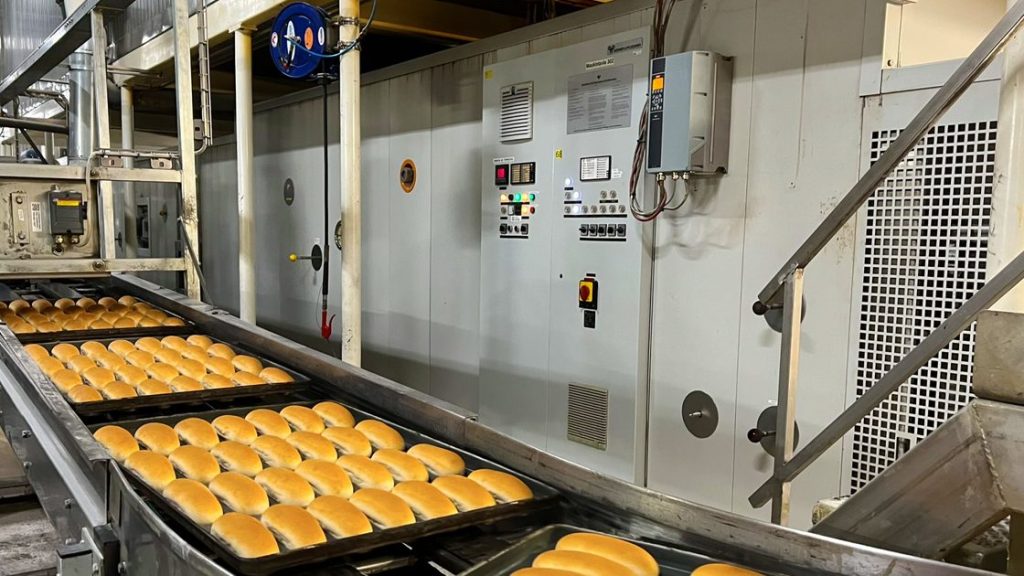
- Industrial automation and machinery
- Pumps and compressors
- Conveyor systems
- Fans and ventilation systems
- Conveyors and production lines
Why is motor control gear important?
Electric motors can draw high current when they start or if they are overloaded. Without proper control gear, this can lead to:
- Motor damage
- Overheating
- Electrical faults
- Shorter equipment life
- Costly repairs
- Danger to equipment and personnel
Key motor control gear components
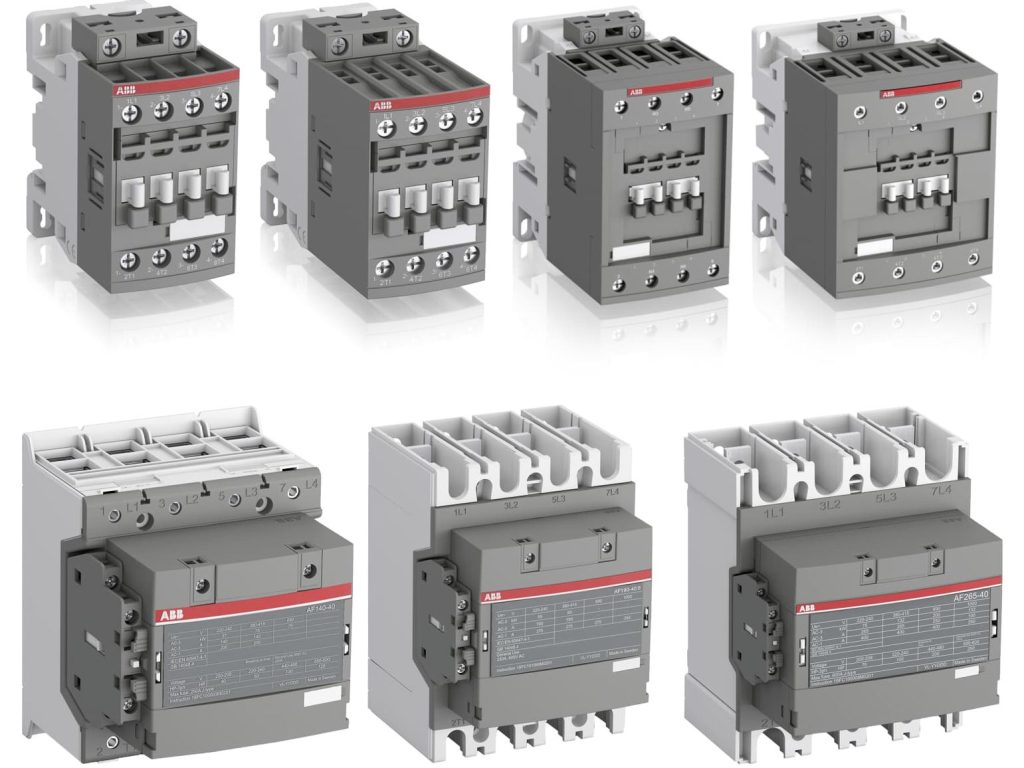
Contactors
A contactor is an electrically operated switch used to connect or disconnect motor power. It allows a low-voltage control signal to safely switch a much higher-voltage and higher-current circuit.
How a contactor works
A contactor uses electromagnetism. Inside the contactor is a metal coil. When a control voltage is applied to this coil, it creates a magnetic field. This magnetic field pulls a movable iron armature towards the coil. As the armature moves, it forces a set of heavy-duty electrical contacts to close. This completes a circuit and allows power to flow to the motor.
When the control voltage is removed, the magnetic field collapses. A spring then pushes the armature back to its resting position, opening the contacts and cutting power to the motor.
This simple mechanism allows:
- A small control current to operate a large electrical load
- Safe separation between control circuits and power circuits
- Reliable switching of motors many times a day without damage
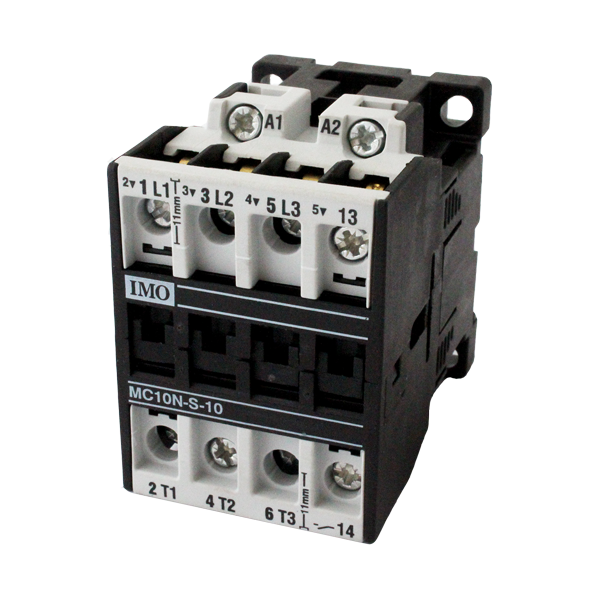
Unlike a standard switch or relay, contactors are designed to handle high inrush currents, which are surges in current often required to get a motor up to speed from a dead stop. This spike in power can be several times higher than the motor’s normal running current. Once the motor reaches speed, the current quickly drops to its normal level.
How contactors are used in motor control
- Starting and stopping motors
- The contactor switches power to the motor when a start command is given, either manually or automatically. When the stop command is received, the contactor opens and disconnects the motor.
- Remote and automatic control
- Because the coil can be controlled from a low-voltage signal, motors can be started from control panels, push buttons, PLCs or building management systems, even when the motor itself is located elsewhere.
- Reversing motors
- By using two contactors wired in a specific arrangement, the direction of a three-phase motor can be reversed. One contactor runs the motor forward, the other runs it in reverse. Electrical and mechanical interlocks are used so both cannot operate at the same time.
- Integration with motor protection
- Contactors are commonly paired with thermal overload relays. The contactor handles switching, while the overload relay protects the motor from sustained overcurrent. This combination forms the basis of many motor starters.
Choosing the right contactor for a motor
When selecting a contactor for motor control, key factors include:
- Motor voltage and full load current
- AC utilisation category, such as AC-3 for standard motor starting
- Coil control voltage
- Number of poles and auxiliary contacts
- Mechanical and electrical endurance requirements
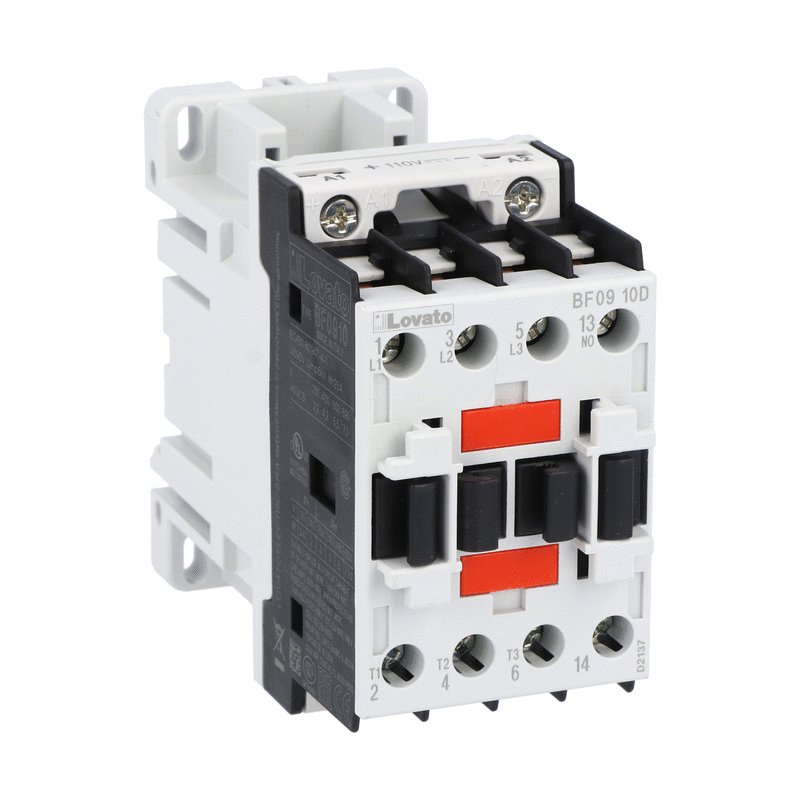
Contactor Ranges at LED Controls
| Brand / range | Typical uses | Notes |
|---|---|---|
| ABB contactors | General industrial motor control | Widely used IEC contactors offering high reliability across a broad range of motor sizes, suitable for DOL starters and control panels. |
| IMO contactors | Industrial motors and auxiliary control | Robust contactors available with multiple pole options and auxiliaries, commonly used in machine control and panel building. |
| Chint contactors | Light to medium industrial motor control | Cost-effective range including mini and NC1 series contactors, ideal for general motor switching and DOL applications. |
| Lovato contactors | Standard motor control and compact panels | Compact, modular designs well suited to DIN rail mounting and applications where panel space is limited. |
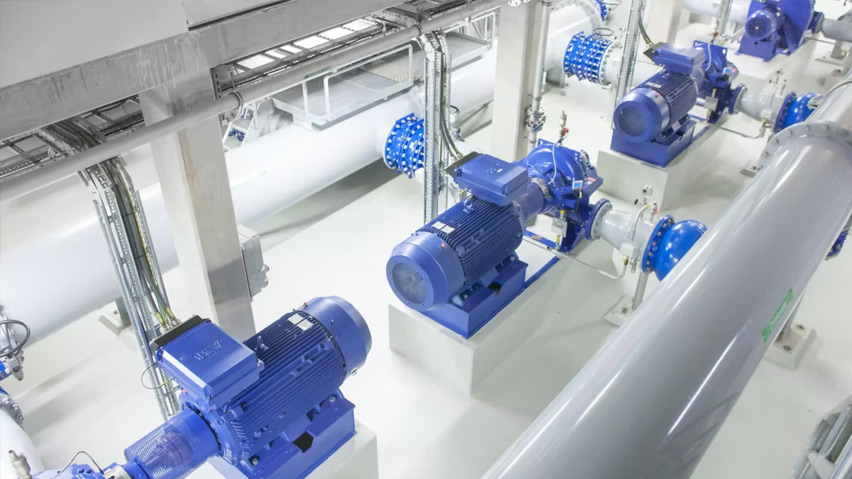
Main power vs control voltage
In industrial motor control systems, it is important to understand the difference between main power and control voltage.
Main power (load side)
The main power circuit is the high-current part of the system that actually supplies energy to make the motor turn. This is sometimes called the load side, power circuit or supply voltage. There is no single global standard voltage, but in the UK and most industrial environments, this is almost always:
- 400 V three-phase AC for industrial motors
- 230 V single-phase AC for smaller motors
Because motors require significant power, the main supply is AC in most industrial applications. AC is efficient to generate and distribute, especially over long distances.
Control voltage (control circuit)
The control circuit is different. It does not power the motor directly, but powers components that control the Main Power. The control circuit might energise:
- Contactor coils
- Timer relays
- PLC inputs and outputs
- Push buttons and sensors
- Indicator lamps
Control circuits operate at much lower currents and often at lower voltages for safety and compatibility with automation systems. Common control voltages include:
- 24 V DC (very common in modern automation and PLC systems)
- 110 V AC (often used in industrial control panels in the UK)
- 230 V AC (sometimes used in simpler systems)
There is no single mandatory control voltage standard, but 24 V DC has become widely used in industrial automation because it is safer to work with and integrates easily with electronic control systems.
What do we mean by AC and DC in automation?
When we talk about AC or DC in motor control, we are usually referring to the control voltage, not the main supply.
- AC control voltage means the contactor coil or control device is energised by alternating current.
- DC control voltage means the coil or device is energised by direct current.
The motor itself is almost always powered by AC supply voltage in standard industrial systems. This is why you will often see a contactor described as:
- “230 V AC coil”
- “24 V DC coil”
- Or “100–250 V AC/DC coil”
The coil rating tells you what type of control voltage is required to power the contactor.
Advantages of AC/DC capable contactors
Control voltages can vary between projects. Some sites standardise on 24 V DC. Others use 110 V AC. Some export machinery requires flexibility. An AC/DC capable contactor has a universal coil that can operate on either AC or DC within a specified voltage range. This offers several advantages:
- Simplifies panel design
- Reduces the number of variants you need to stock
- Makes systems more flexible across different installations
- Helps standardise control architectures
In many cases, the main power circuit remains 400 V AC three-phase, while the control circuit could be 24 V DC or 110 V AC. A universal coil contactor bridges that gap.
AC/DC contactors at LED Controls
ABB AF contactors with true wide-range AC/DC coil capability, ideal for modern industrial panels.
| Brand / range | Typical uses | Notes |
|---|---|---|
| ABB AF contactors | Industrial motor control and automation panels | ABB AF contactors feature wide-range coils, commonly supporting voltages such as 24–60 V AC/DC or 100–250 V AC/DC, making them ideal where control supply type may vary. |
Overload Relays
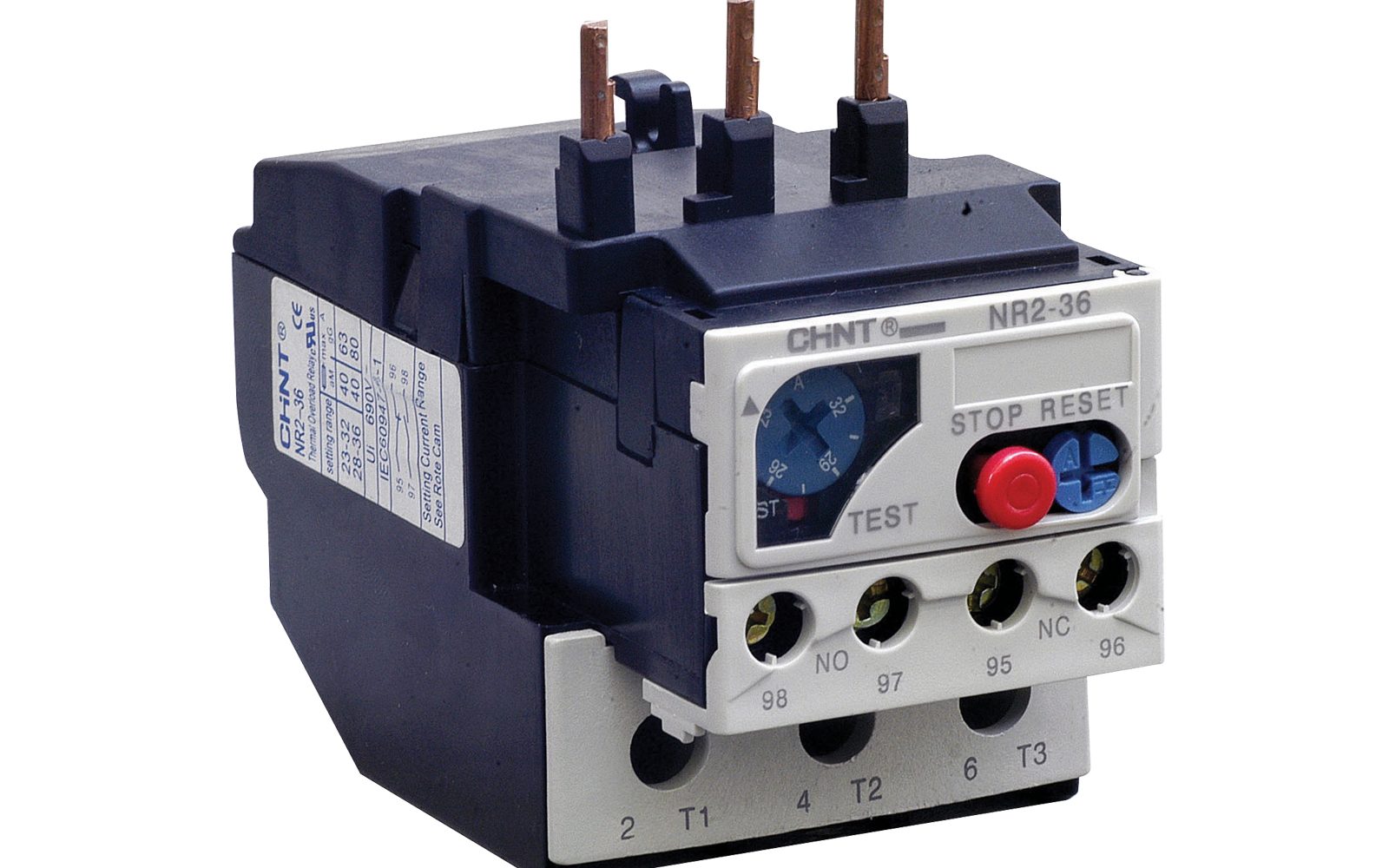
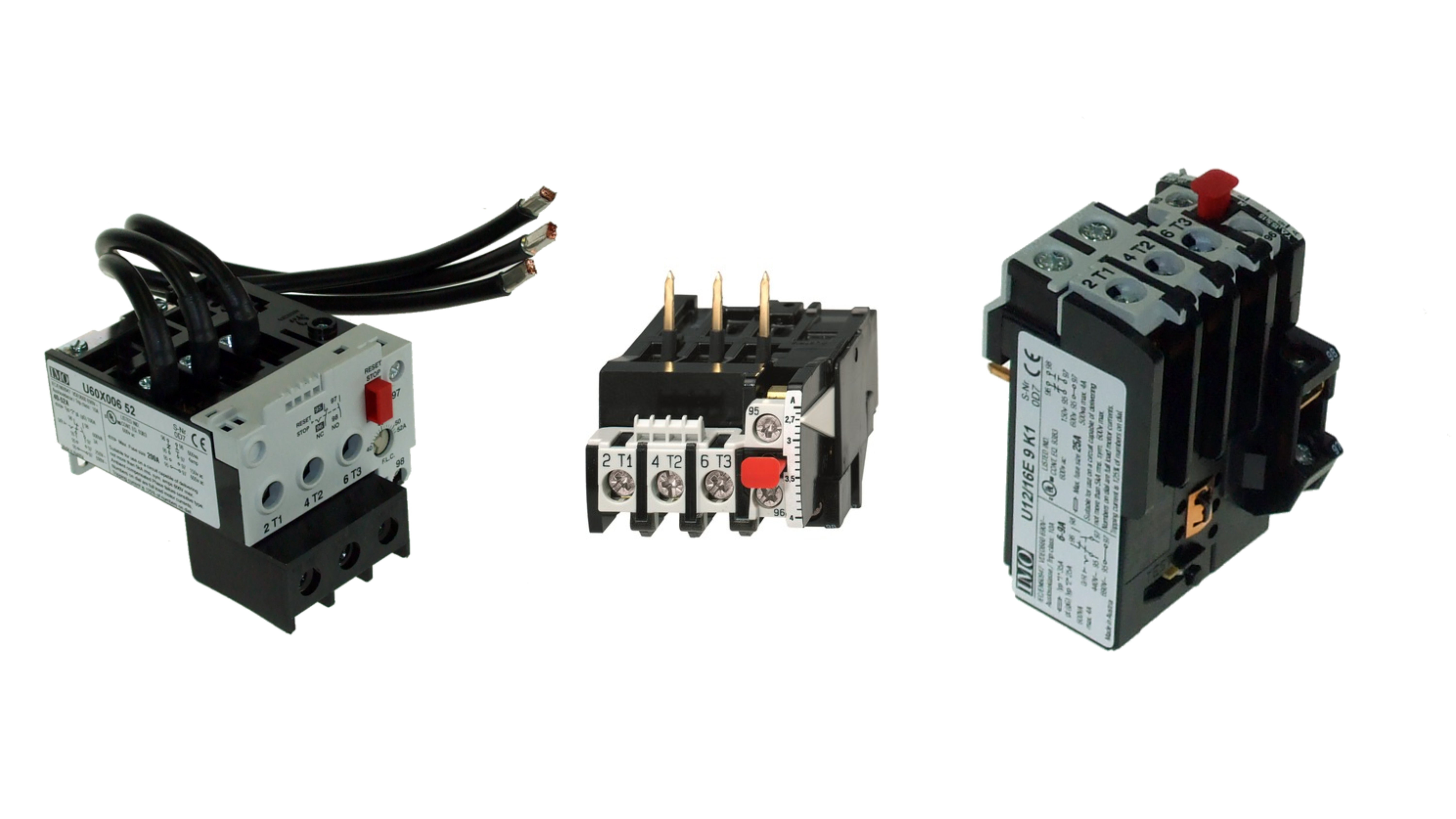
An overload relay is a device that protects an electric motor from conditions that could cause it to overheat or draw excessive current over time. It is a vital part of motor control gear because motors can be damaged not just by sudden faults, but also by running too hard for too long.
Overload relays are usually installed in series with the motor supply, and often sit alongside a contactor in a motor starter. When the overload relay detects that the motor is working outside its safe current range, it opens the circuit to stop the motor before damage occurs.
Why overload protection matters
When a motor is overloaded for too long, it overheats. Overheating can:
- Reduce the life of the motor windings
- Melt insulation inside the motor
- Lead to costly repairs or complete motor failure
Overload relays help prevent this by detecting when the motor is working too hard and cutting power before overheating becomes a problem.
How overload relays work
1. Thermal overload relays
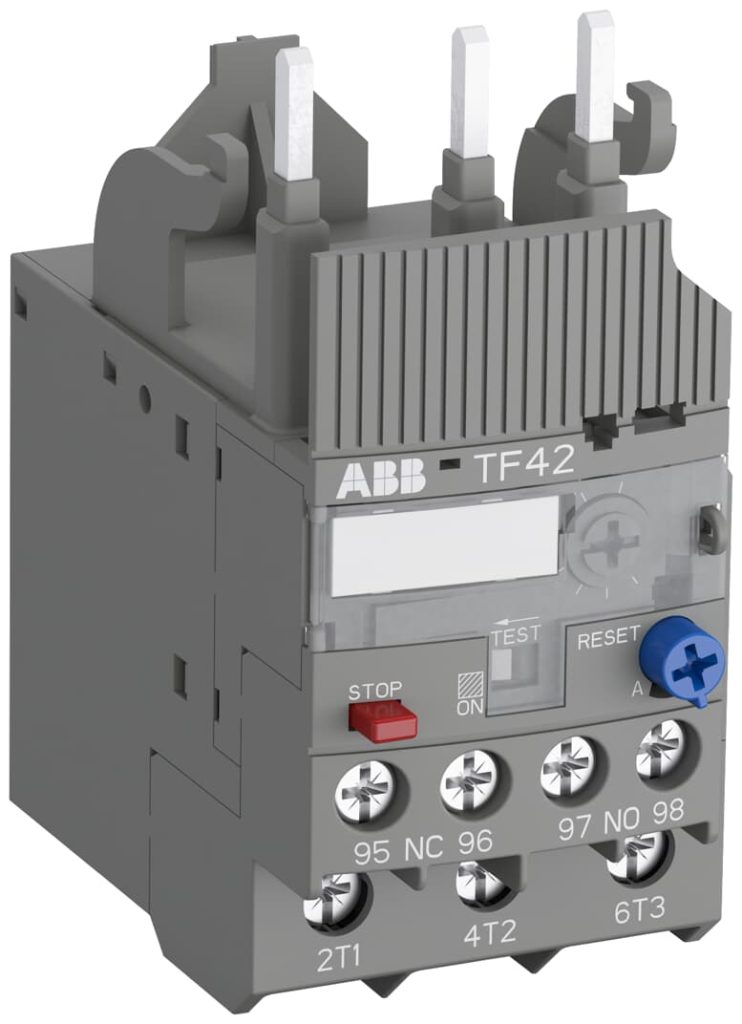
A thermal overload relay uses a set of metal strips or bimetallic elements that bend when they get hot. The heat comes from the current flowing through the relay. If the current stays too high for long enough, the metal bends enough to trip the relay and open the circuit.
Thermal relays are simple and reliable. They respond well to prolonged overload conditions, but they do not react instantly to short spikes in current (which are often harmless).
2. Electronic overload relays
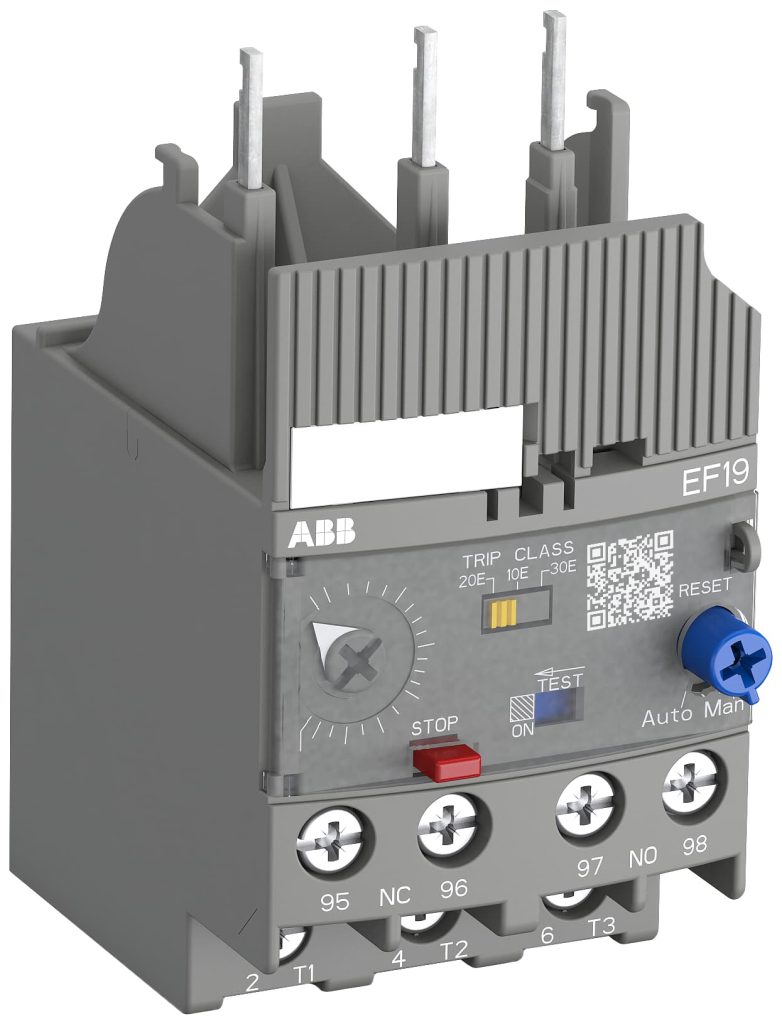
An electronic overload relay uses sensors and electronic circuits to measure the motor current more precisely. These relays can respond quickly and accurately to overload conditions, and often have adjustable settings for:
- Motor full load current
- Trip class (how fast the relay should react)
- Reset mode (automatic or manual)
Electronic relays are more flexible and often more accurate than thermal types, but they do usually come at a higher price.
Find out more about Thermal V Electronic Overloads here.
Overload relays in motor control systems
In a typical motor starter, the overload relay works together with a contactor:
- When the motor is started, the contactor closes and power flows to the motor.
- The overload relay continuously monitors the current.
- If the motor draws too much current for too long, the relay trips.
- When the relay trips, it opens the control circuit, which causes the contactor to open and stop the motor.
This arrangement ensures that the motor is automatically protected without needing an operator watching over it all the time.
Some overload relays also offer phase loss detection, which helps protect three-phase motors if one phase disappears. Others have adjustable current settings so they can be matched precisely to the motor’s rated current.
Choosing the right overload relay
When selecting an overload relay, consider:
- The full load current of the motor
- Whether you want thermal or electronic protection
- Whether you need reset options (automatic or manual)
- Compatibility with the contactor and starter being used
LED Controls stocks a wide range of overload relays to suit many motor control needs.
Recommended overload relay ranges at LED Controls
| Brand / range | Typical uses | Notes |
|---|---|---|
| ABB overload relays | General industrial motor protection | Reliable protection for a wide range of motors, often used with ABB contactors. |
| Chint overload relays | Light to medium duty motors | Cost-effective relays suited to panels and starters in everyday applications. |
| IMO overload relays | Industrial motor control systems | Offers both basic and adjustable relay options for panel builders and machine installers. |
| Lovato overload relays | Standard protection and control | Good choice for DIN-rail mounted starters and compact panels. |
Direct On-Line (DOL) starters
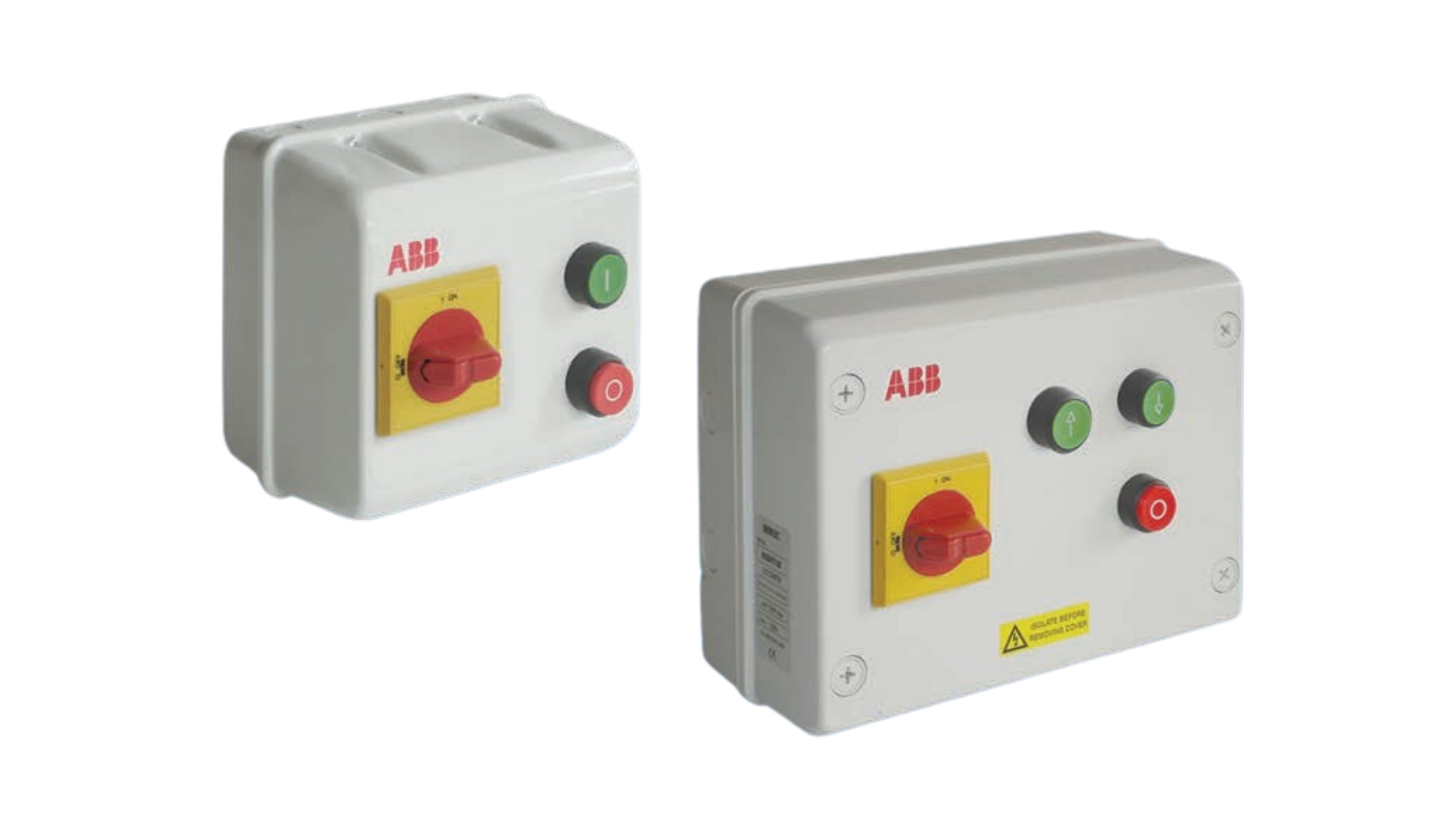
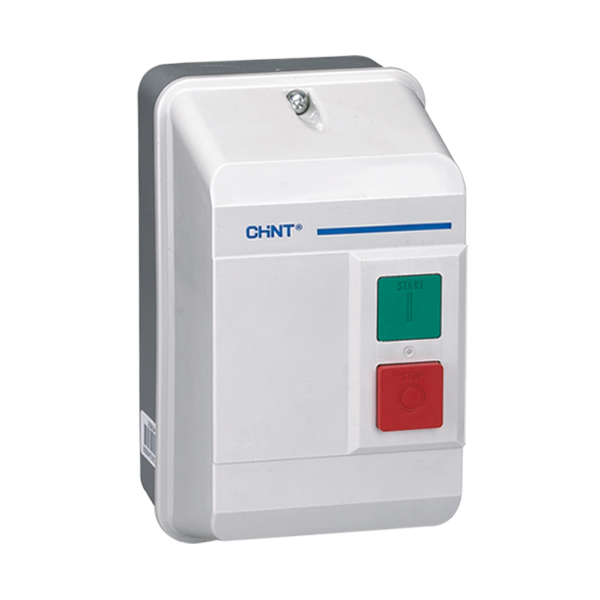
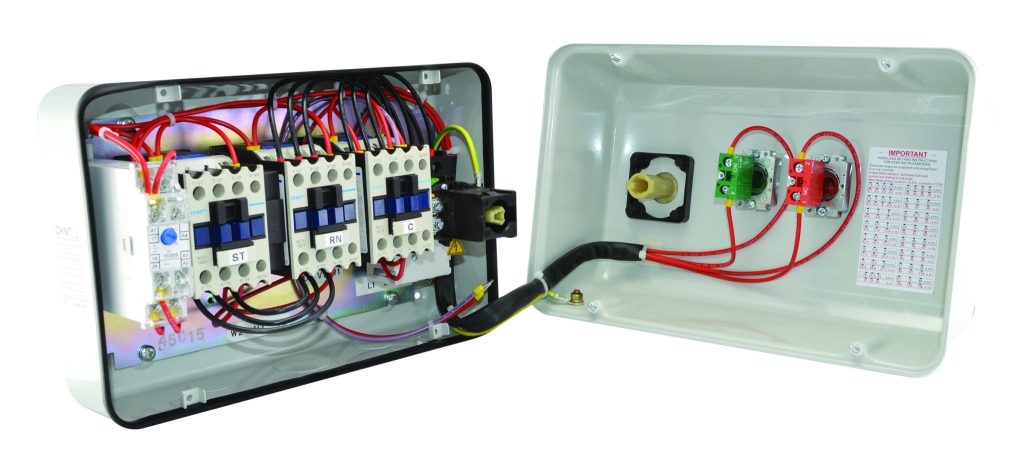
A Direct On-Line (DOL) starter is the most straightforward and commonly used method of starting an electric motor. As the name suggests, it connects the motor directly to the full supply voltage when started. This causes the motor to accelerate to full speed almost immediately.
DOL starters are widely used because they are simple, reliable and cost-effective. They are especially common in applications where the motor does not need a soft or controlled start.
How a DOL starter works
A typical DOL starter contains two main components inside one enclosure:
- A contactor, which switches the power supply to the motor
- An overload relay, which protects the motor from sustained overcurrent
When the start button is pressed or a control signal is received, the contactor closes and applies full voltage to the motor. The motor draws inrush current for a short time and quickly reaches its normal running speed.
If the motor becomes overloaded or overheats, the overload relay trips. This opens the control circuit, causing the contactor to open and disconnect the motor from the supply.
Key characteristics of a DOL starter
- High starting current compared to other starter types
- High starting torque, which can be useful for certain loads
- Simple wiring and control, with minimal components
- Low cost compared to more advanced starters
Limitations of DOL starters
DOL Starters are not suitable for every application. Their main limitation is the high inrush current at start-up, which can:
- Cause voltage dips on weak power supplies
- Place mechanical stress on shafts, belts or couplings
For large motors or sensitive systems, alternative starters such as star-delta starters or soft starters may be more appropriate.
DOL starters in motor control systems
Because of their simplicity, DOL starters are often the first choice when designing a motor control panel, especially for straightforward applications. They are best suited to applications where:
- The power supply can handle the high starting current
- Sudden starting torque will not damage the driven equipment
- Smooth or gradual acceleration is not required
Common applications include:
- Pumps
- Fans and blowers
- Compressors
- Conveyors with light or moderate loads
Choosing the right DOL starter
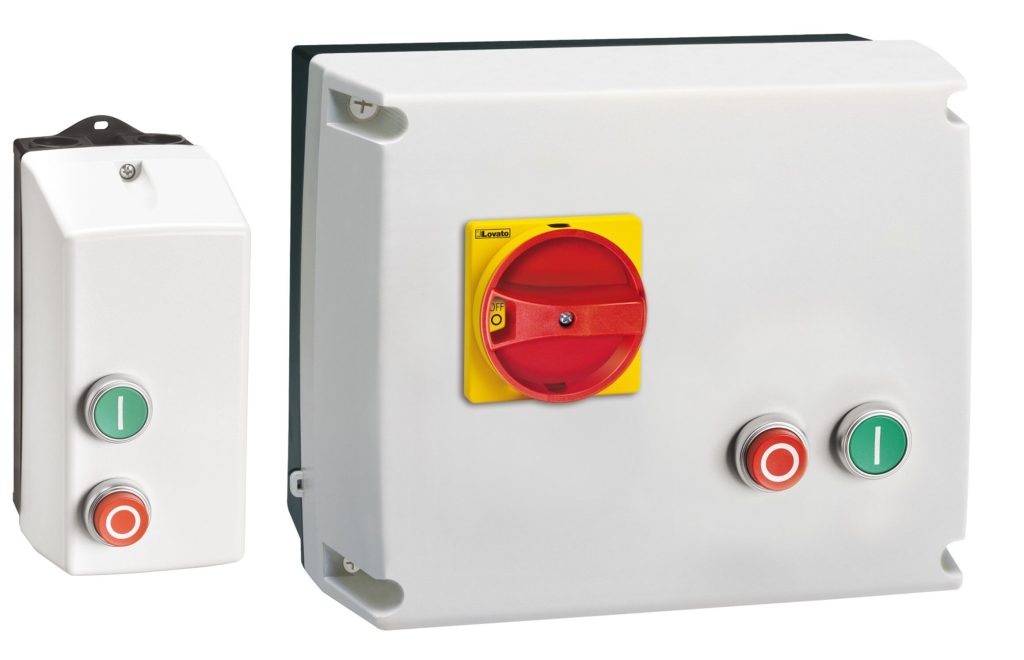
Choosing the right DOL starter means matching it to the motor you want to control and the conditions where it will operate. A good choice ensures reliable starts, motor protection and long equipment life.
When selecting a DOL starter, consider these key points:
- Motor power and full load current
Look at the motor’s rated power (in kilowatts) and full load current (in amps). The DOL starter you choose must be rated ABOVE these values so it can handle the load without overheating or tripping unnecessarily. - Supply voltage and phase
Ensure the starter matches the supply voltage (for example 230 V or 400 V) and phase (single or three-phase) of your system. - Protection features
Most DOL starters include an overload relay, but check whether you need adjustable current settings or manual/automatic reset options. Some starters also include short-circuit protection when paired with suitable protective devices. - Usage environment
If the starter will be installed in a dusty, humid or temperature-extreme environment, ensure it has the appropriate enclosure and protection rating (e.g. IP rating). - Control preferences
Decide whether you need additional features like remote start/stop, indicator lights or compatibility with a building management system. - Future flexibility
If you may upgrade motors or change installation conditions in future, choose a starter range with a broad selection of sizes and options to suit future needs.
Recommended DOL starter ranges at LED Controls
| Brand / range | Typical uses | Notes |
|---|---|---|
| ABB DOL starters | General industrial and commercial motor starting | Well-established range with reliable performance and good accessory support. ABB is a trusted choice for many industrial and commercial uses. |
| Lovato DOL starters | Standard motor control and compact panels | Great choice for DIN-rail mounting and modular control panels. Lovato works well where panel space is limited. |
| IMO DOL starters | Industrial motor applications | Robust starters suitable for heavier duty, frequent starts or rougher conditions. |
| EMAS DOL starters | Panel built motor starting solutions | EMAS is often specified when starters are built into larger electrical enclosures. |
| Chint DOL starters | Light to medium industrial applications | Offers value options for everyday motors and straightforward installations. |
Star Delta starters
A Star Delta starter is used to reduce the electrical and mechanical stress that occurs when starting a large three-phase motor. Instead of applying full voltage straight away, the motor is started at a reduced voltage and then switched to full power once it is running.
This method is commonly used where a Direct On-Line (DOL) start would cause excessive inrush current or sudden mechanical shock.
How a Star Delta starter works
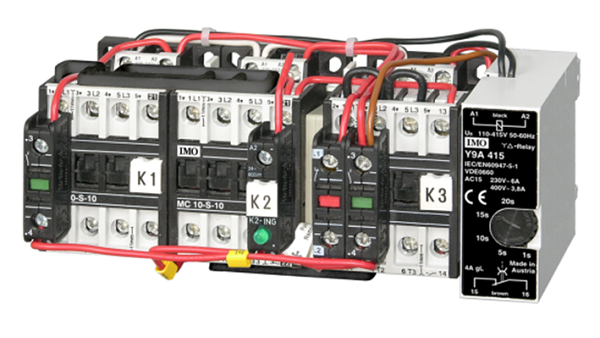
A Star Delta starter changes how the motor windings are connected during start-up:
- At start-up, the motor windings are connected in a star configuration
- This reduces the voltage across each winding and lowers the starting current
- After a short delay, the starter switches the windings into a delta configuration
- In delta, the motor receives full supply voltage and runs normally
The switching is usually controlled by a timer and a set of interlocked contactors to ensure safe operation.
Key characteristics of Star Delta starters
- Reduced starting current compared to DOL
- Lower starting torque
- More complex wiring than a DOL starter
- Suitable only for motors designed to run in delta at full voltage
Typical applications
- Pumps
- Fans and blowers
- Compressors
- Conveyors with moderate starting loads
They are best suited to motors that can start under light load and do not require high starting torque.
Star Delta Starter Ranges at LED Controls
| Brand / range | Typical uses | Notes |
|---|---|---|
| Lovato Star Delta starters | Compact panels and standard industrial applications | Well suited to modular panel designs where space and flexibility are important. |
| IMO Star Delta starters | Medium to heavy duty motor control | Robust construction, often chosen for frequent starting and industrial environments. |
| Chint Star Delta starters | Cost-effective industrial motor starting | Practical option for applications needing reduced start current without the cost of soft starters. |
Soft starters
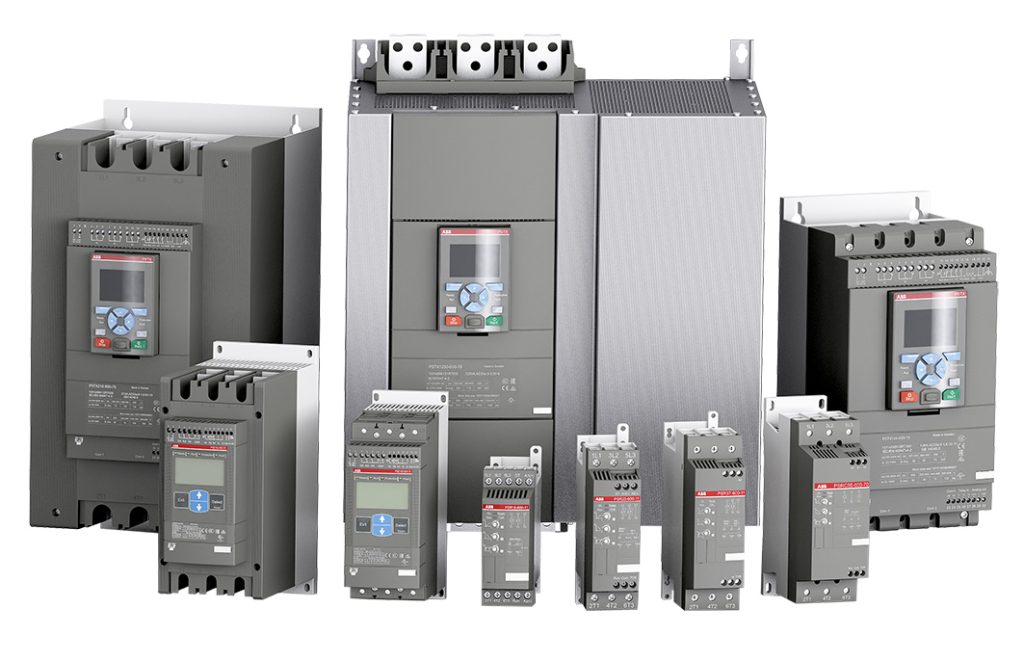
A Soft starter is an electronic motor starter that gradually increases the voltage supplied to a motor during start-up. This allows the motor to accelerate smoothly rather than starting suddenly at full power.
Soft starters are ideal where controlled acceleration is important, both to protect equipment and to reduce stress on the electrical supply.
How a soft starter works
Soft starters work by controlling how much voltage is applied to the motor during start-up, rather than switching full power on instantly. Inside a soft starter are electronic switching components, usually thyristors, which rapidly turn the supply on and off many times per second. By controlling how long these devices stay on during each cycle, the soft starter limits the voltage reaching the motor at the beginning of the start sequence.
As the voltage is gradually increased, the motor accelerates smoothly. This controlled rise in voltage reduces the starting current and limits the torque produced during start-up, which helps prevent mechanical shock to shafts, belts and couplings. The ramp-up time can usually be adjusted to suit the motor and the load, allowing the start to be tailored to the application.
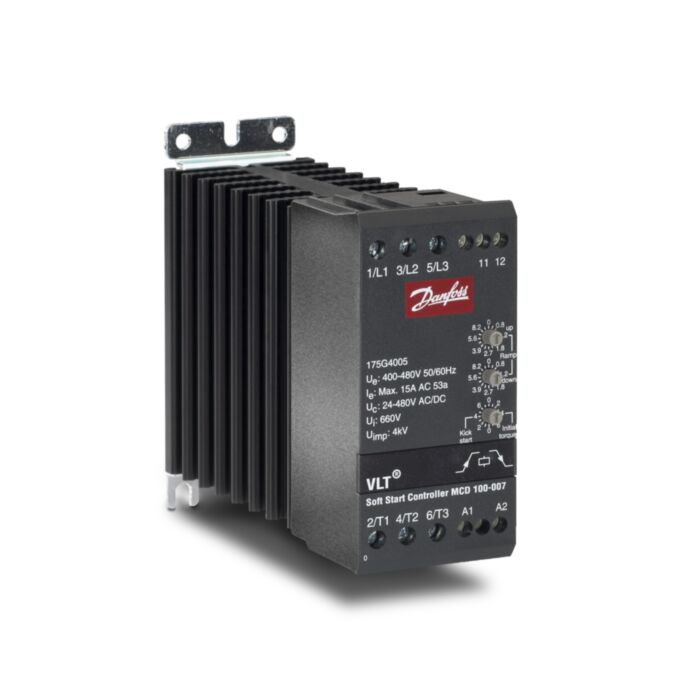
Once the motor reaches its normal running speed, the soft starter allows full voltage to pass through, either electronically or via an internal bypass contact. At this point, the motor runs as if it were connected directly to the supply. Many soft starters can also manage stopping in a similar way, gradually reducing voltage so the motor slows down smoothly instead of stopping suddenly, which is especially useful for pumps and conveyor systems.
Key characteristics of soft starters
- Significantly reduced starting current
- Smooth acceleration and deceleration
- Adjustable start and stop parameters
- Built-in motor protection features on many models
Typical applications
Soft starters are commonly used where mechanical stress needs to be minimised:
- Conveyors and belt-driven systems
- Pumps, especially to reduce water hammer
- Fans and ventilation systems
- Compressors and processing equipment
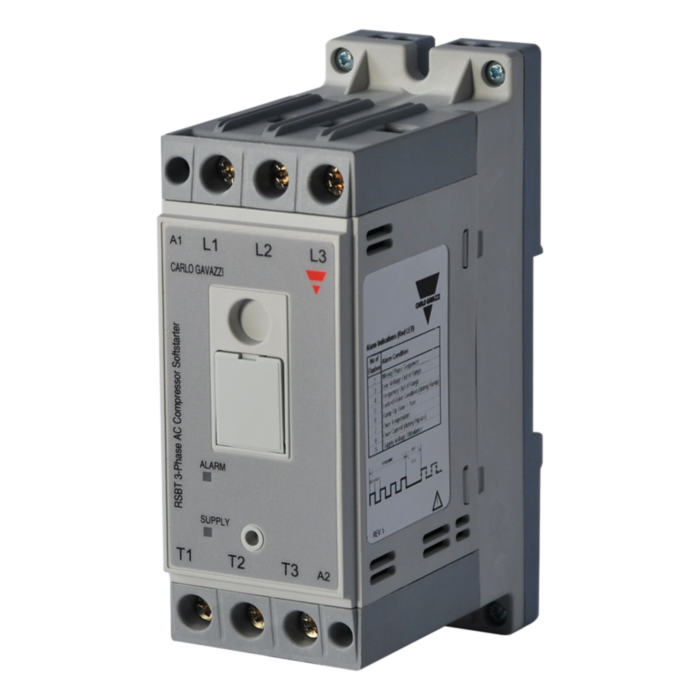
They are especially useful for larger motors or systems with frequent starts and stops.
Soft starters at LED Controls
| Brand / range | Typical uses | Product focus |
|---|---|---|
| ABB Softstarters | Smooth start and stop for industrial and commercial motors | Adjustable ramp settings, built-in motor protection and reliable soft starting for a wide range of applications. |
| Lovato Soft Starters | Soft start control in panel-mounted systems | Designed for controlled motor acceleration and deceleration, helping reduce mechanical shock and inrush current. |
| Danfoss soft starters | Heavy-duty and compact soft start motor control | Danfoss offers MCD and VLT® series soft starters for smooth motor starting and stopping, with robust design for industrial use. |
| Carlo Gavazzi Soft Starters | Flexible soft starting for diverse motor types | Units suited to both single-phase and three-phase motor starters, typically featuring overload monitoring and smooth control. |
Manual motor starter
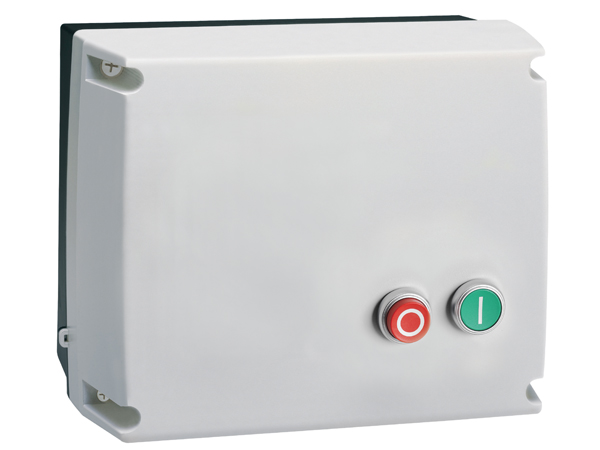
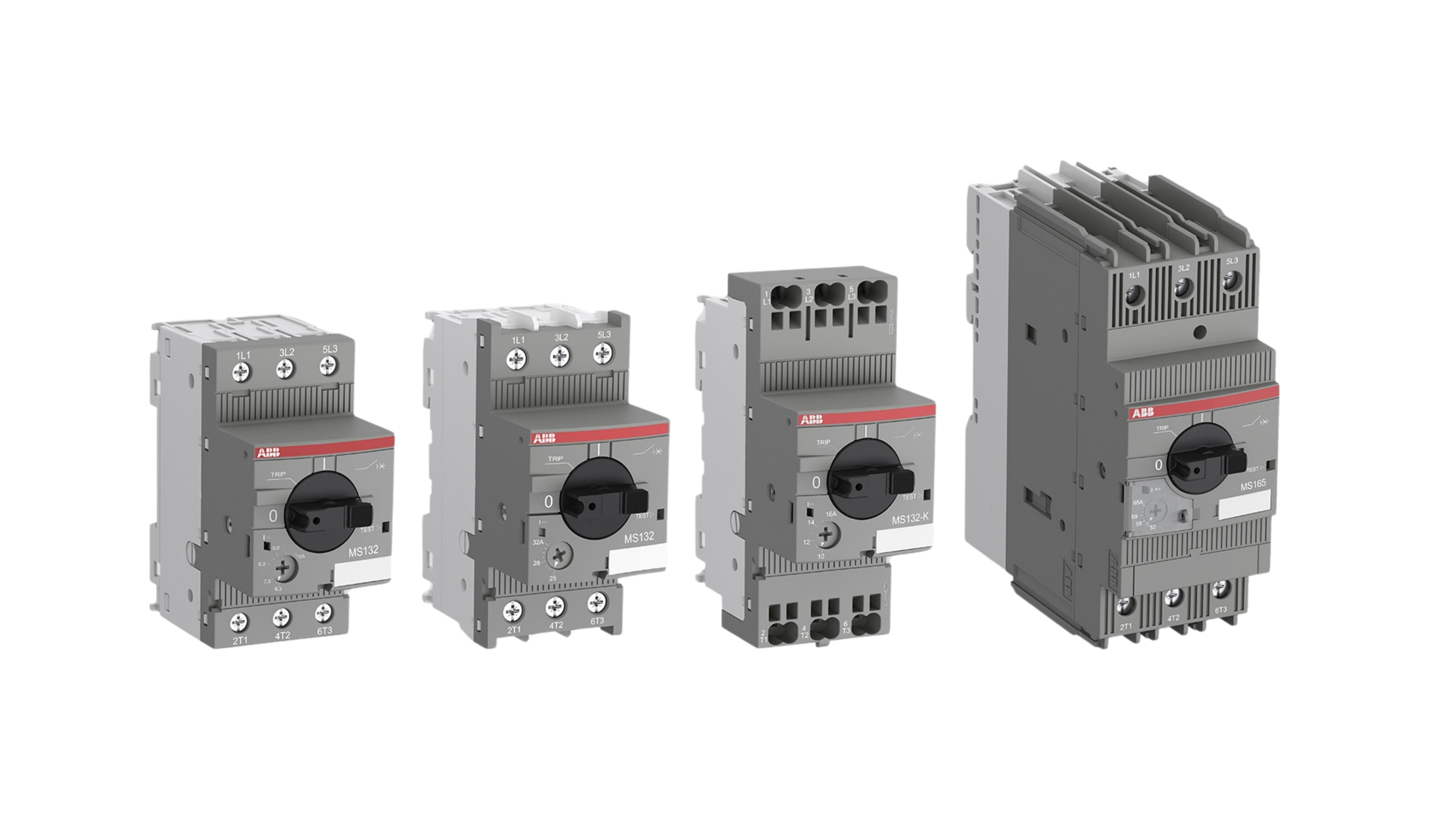
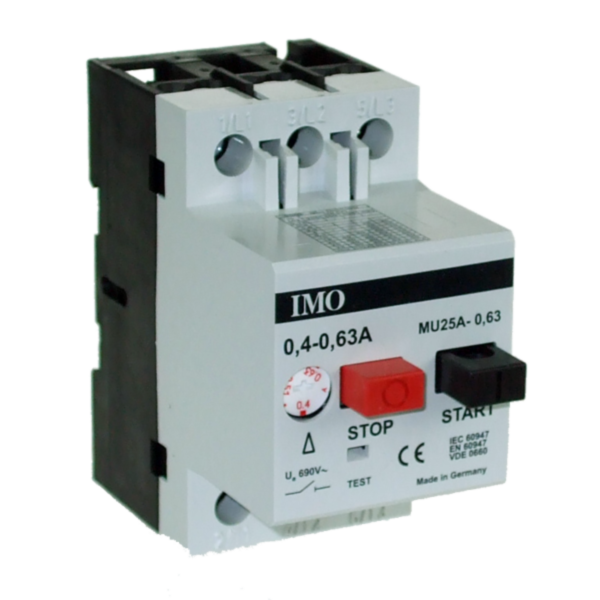
A Manual Motor Starter (MMS) is a compact device that combines a manual on and off switch with built-in motor protection. It is operated directly by a person, usually via a rotary handle or push switch on the front of the unit, rather than being controlled automatically or remotely.
Manual motor starters are designed to provide a simple and reliable way to start, stop and protect an electric motor. Because switching and overload protection are combined into a single device, they are easy to install and help reduce wiring and panel space. This makes them a popular choice for smaller motors or installations where automation is not required.
Manual motor starters are commonly used in applications where the motor is started and stopped locally, such as small pumps, fans, workshop machinery or standalone pieces of equipment. They are especially useful where simplicity, clarity and ease of maintenance are important.
How a manual motor starter works
A manual motor starter contains several key elements working together:
- A manual switching mechanism, usually a rotary handle or toggle, which allows the operator to turn the motor on and off directly
- Built-in overload protection, which monitors the current drawn by the motor during operation
- Adjustable current settings, allowing the starter to be matched precisely to the motor’s rated full load current
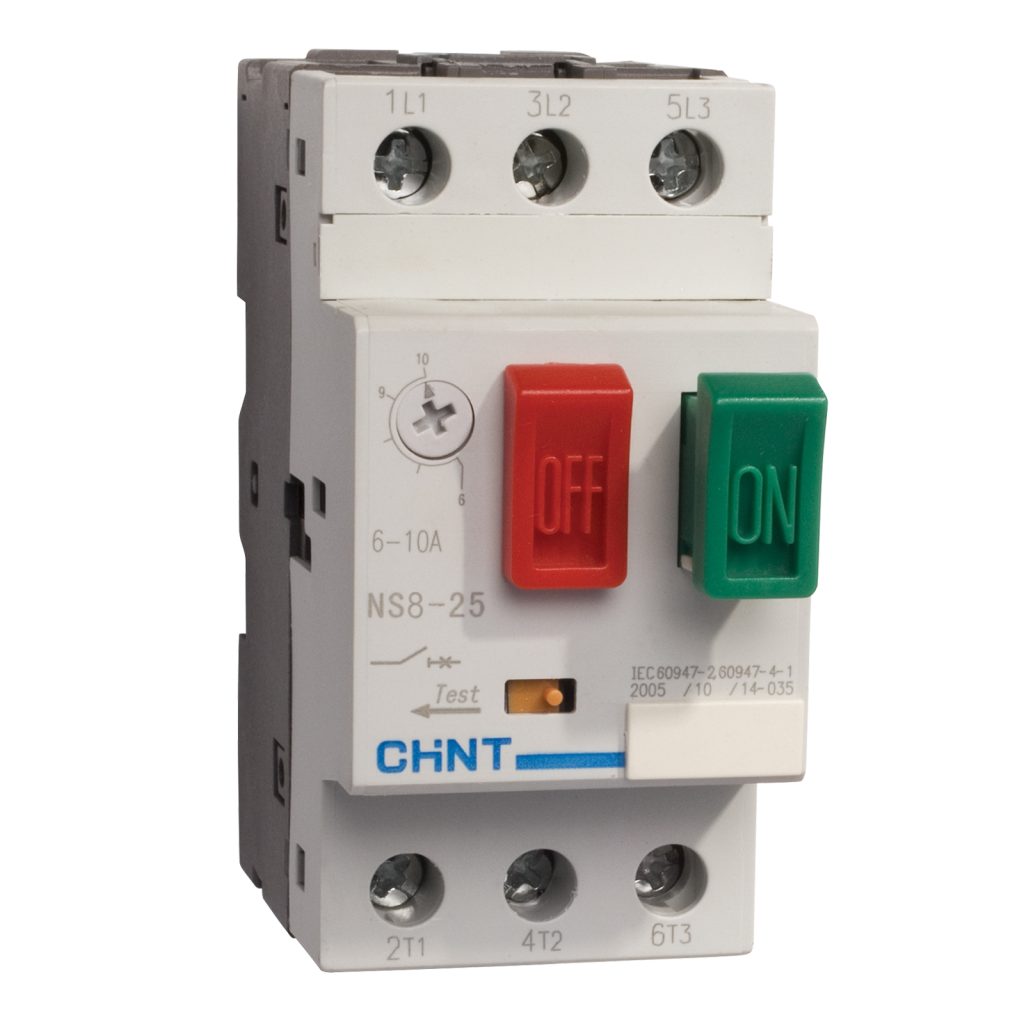
When the starter is switched on, power flows directly to the motor and it begins to run. As the motor operates, the starter continuously monitors the current. If the motor becomes overloaded, for example due to a mechanical blockage or excessive load, the current increases and causes the overload protection to trip.
When the starter trips, it cuts power to the motor to prevent overheating and damage. The motor cannot be restarted until the fault has been identified and cleared, and the starter has been manually reset. This helps ensure that problems are addressed rather than ignored, improving safety and extending the life of the motor.
Key characteristics of manual motor starters
- Simple manual operation
- Integrated overload protection
- Compact design
- No remote or automatic control
Typical applications
Manual motor starters are often used for:
- Small pumps and fans
- Workshop machinery
- Simple industrial equipment
- Applications where the motor is started locally
They are popular where ease of use, low cost and space saving are priorities.
Manual Motor Starters at LED Controls:
| Brand / range | Typical uses | Notes |
|---|---|---|
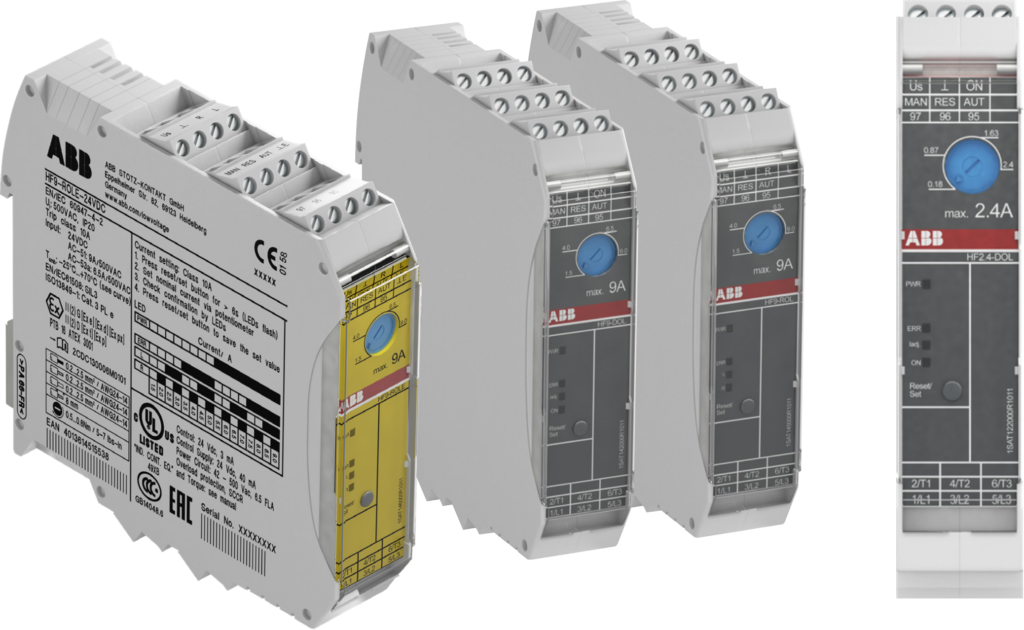
| ABB Manual Motor Starters | Small to medium motors in industrial settings | High quality starters with precise overload adjustment and strong build quality. |
| IMO Manual Motor Starters | General industrial motor protection | Practical range offering good balance between performance and cost. |
| Chint Manual Motor Starters | Cost-effective motor switching | Suitable for straightforward applications where manual control is sufficient. |
Electronic motor starters
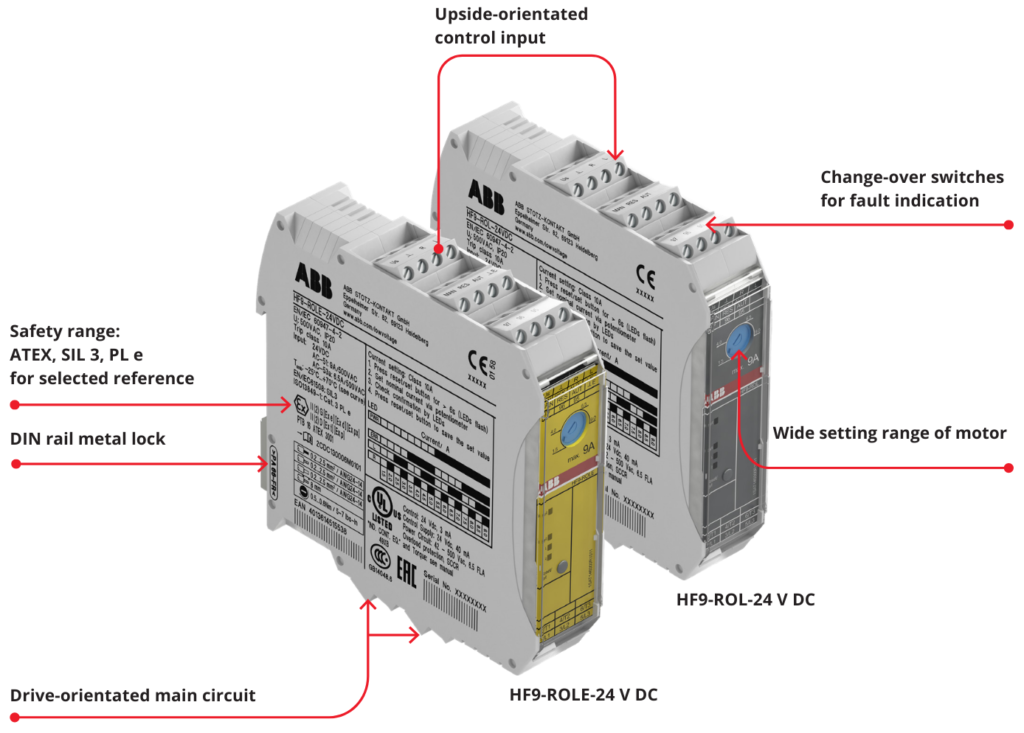
Electronic motor starters are a modern motor control device that can bring together starting, switching, protection and sometimes even communication into a single compact unit. They sit between traditional mechanical starters and fully programmable drives in capability and are especially useful if you're looking to save space and wiring, and integrate protection.
What electronic motor starters do
Unlike a conventional starter assembled from separate parts (contactor, overload relay, timer, interlocks), an electronic motor starter combines these functions in one device. They are typically used for smaller motors and machines that require:
- Direct on-line (DOL) or reversing start capability
- Integrated overload protection
- Faster switching and fault response than simple mechanical relays
- Compact mounting on DIN rail or bus systems
- Optional communication or interface features for automation
By integrating these functions, electronic starters reduce panel space, simplify design and often improve reliability through fewer connections and moving parts.
Electronic Motor Starters at LED Controls
| Brand / range | Main benefits | Typical use case |
|---|---|---|
| ABB Electronic Compact Starters | All-in-one starter and protection, compact footprint | Small to medium motors where space and wiring simplicity matter |
How motor control components are used together
Certain components are almost always paired:
- Contactors and overload relays are commonly used together to form a basic motor starter
- DOL starters combine a contactor and overload relay into a single unit
- Star Delta starters use multiple contactors and a timer to reduce starting current
- Soft starters often replace DOL or Star Delta starters while still needing separate short-circuit protection
- Manual motor starters combine switching and overload protection but are operated locally
- Electronic motor starters integrate switching, protection and control into one compact device, often as an alternative to traditional contactor and overload combinations.
Understanding these relationships makes it easier to choose the right approach.
What Motor Control Gear do I need?
| Component | Best suited for | Can be used with | Replaces | Notes |
|---|---|---|---|---|
| Contactor | Switching motors on and off | Overload relay, DOL starter, Star Delta starter | Manual switching | Handles high current but does not protect the motor on its own |
| Overload relay | Protecting motors from overheating | Contactor, DOL starter | None | Essential motor protection, not a starter by itself |
| DOL starter | Simple automatic motor starting | Upstream protection devices | Separate contactor and overload | Full voltage start, simple and cost-effective |
| Star Delta starter | Reduced current start for larger motors | Contactors, timers | DOL starter (in some cases) | Lower starting current but more complex |
| Soft starter | Smooth start and stop control | Protection devices, control systems | DOL and Star Delta starters | Adjustable, reduces electrical and mechanical stress |
| Manual motor starter | Local motor control and protection | None, or upstream protection | Contactor + overload for small motors | Simple, compact, no remote control |
| Electronic Motor Starter | Compact integrated motor starting and protection | Control systems, automation interfaces | Contactor + overload combinations, some DOL starters | Combines switching, protection and monitoring in one device |
As a general guide:
- Choose a Manual Motor Starter for small motors that are started locally
- Use a DOL starter for straightforward applications where high starting current is acceptable
- Select a Star Delta starter when supply limitations or motor size make DOL starting unsuitable
- Opt for a Soft starter when smooth acceleration, reduced mechanical stress or controlled stopping is required
- Use an Electronic Motor Starter when you want compact integrated protection and simplified panel wiring
- Combine contactors and overload relays when building custom motor control panels
What about Variable Speed Drives (VSDs)?
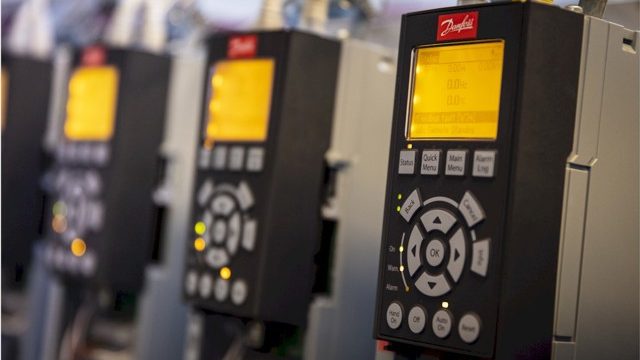
A Variable Speed Drive (VSD), sometimes called a Variable Frequency Drive (VFD), controls the speed and torque of an electric motor by adjusting the frequency and voltage supplied to it. Unlike DOL, Star Delta or Soft Starters, which mainly control how a motor starts, a VSD provides continuous speed control while the motor is running.
VSDs are commonly used in applications where:
- Speed needs to be adjusted during operation
- Energy efficiency is a priority
- Process control is important
- Mechanical wear needs to be reduced
Typical examples include HVAC systems, pumps, fans and conveyor systems, where the motor does not need to run at full speed all the time.
In many cases, a VSD can replace traditional starters entirely, as it provides soft starting, stopping and ongoing speed control in one unit. However, VSDs are more complex and expensive, so are usually chosen when performance, control or energy savings justify the additional cost.
If you would like a deeper explanation of how VSDs work and when to choose one over a soft starter or DOL starter, see our dedicated guide to Variable Speed Drives.
Motor Control Solutions at LED Controls
There is no single “best” motor control solution. The right choice depends on the motor, the application and how much control and protection is required. Over thirty years of industry experience, LED Controls has built a trusted network of suppliers and a wealth of expertise in motor control gear.
We stock and supply a broad range of Motor Control products to match many different applications, and are always happy to help our customers design the perfect motor control system for their needs. You can browse our online catalogue here or get in touch for more information.